
Your conveyor rollers wear out fast. Your crusher feed points crack under impact. Your screens tear at the seams. A single layer of rubber just can’t take that kind of punishment for long. Every time you replace a worn panel, you lose production time on top of the material cost. Do that every few months, and it adds up fast. مطاط ساندويتش can handle it better. Here’s what it is, and why it holds up where regular rubber sheet doesn’t.
What Is Sandwich Rubber?
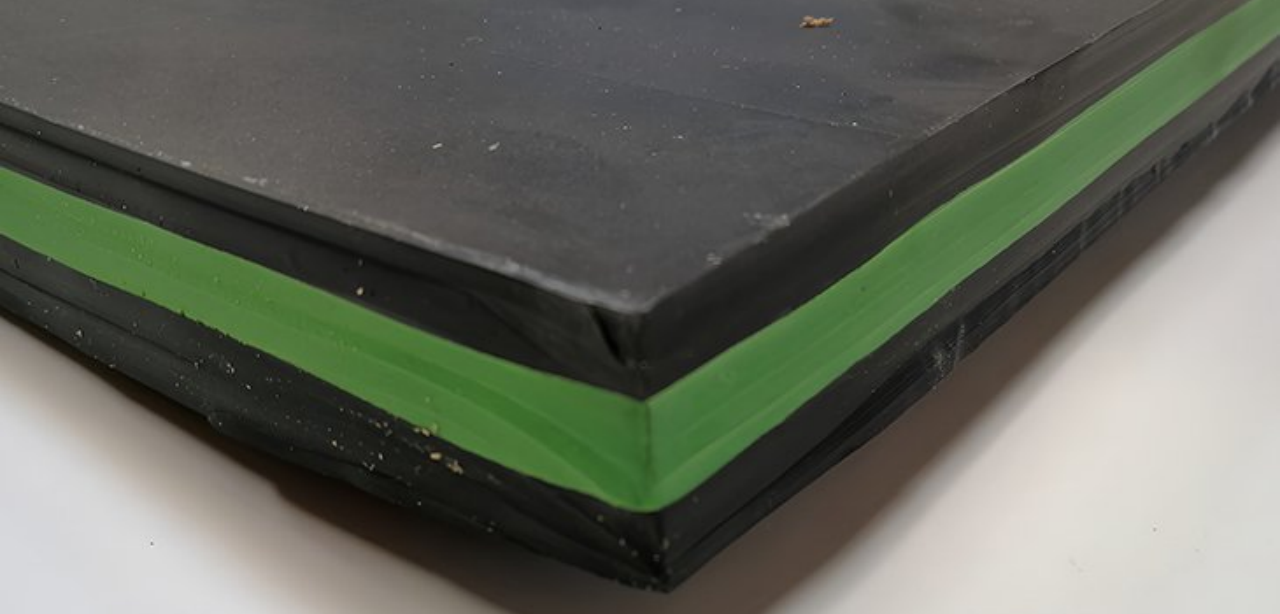
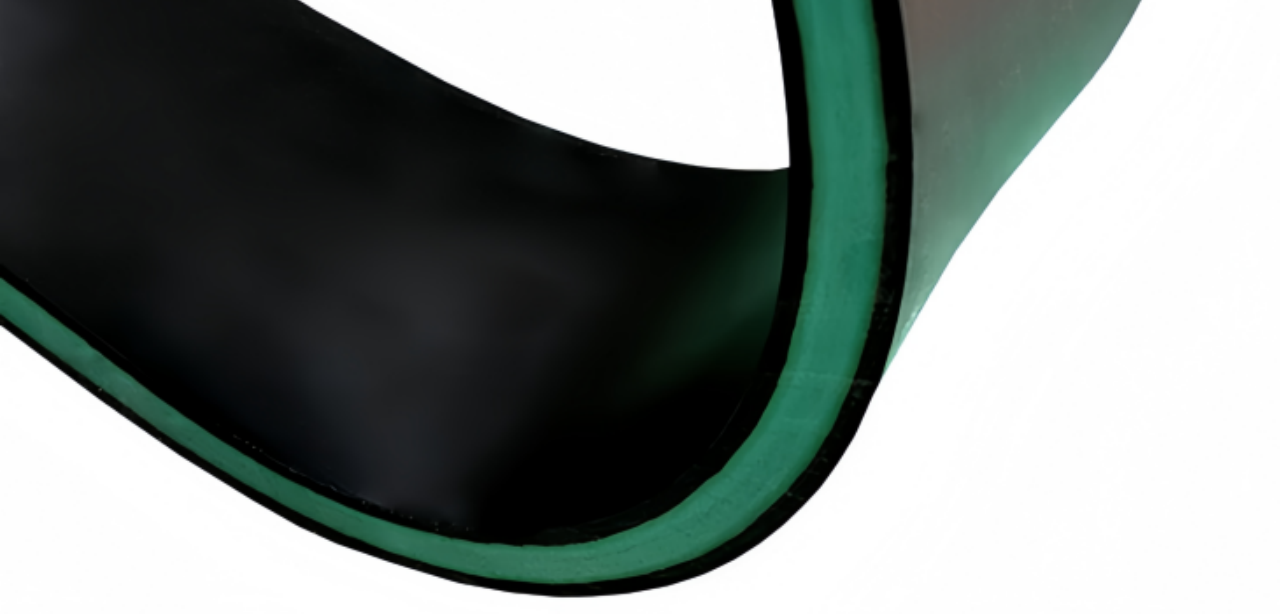
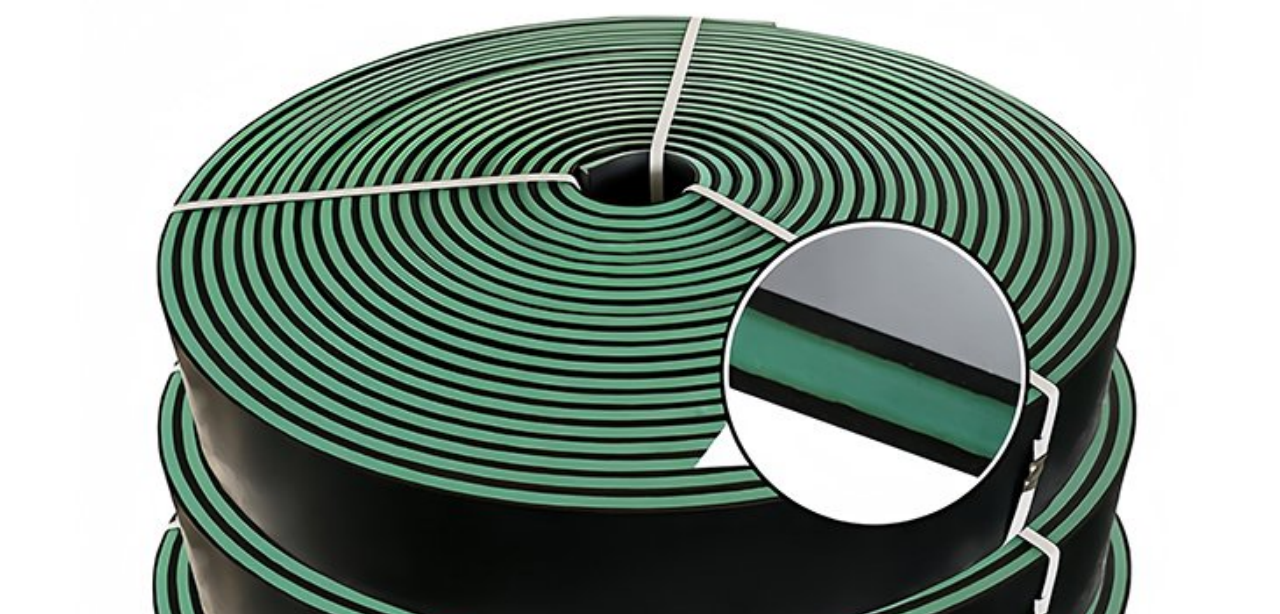
Sandwich rubber, sometimes called laminated rubber, is a three-layer rubber sheet. It’s made from natural rubber (NR) and SBR rubber, stacked in a specific order: SBR+NR+SBR, or NR+SBR+NR. That’s where the name comes from. Two tough layers on the outside. One softer layer in the middle. Just like a sandwich. Each layer has its own job. Your outer layers take the wear and cutting damage from rough material. Your middle layer flexes and absorbs shock. It gives the sheet extra support and helps material slide across the surface more easily.
Why Three Layers Beat One
One layer of rubber has to do everything at once. Resist cuts. Absorb impact. Hold up to constant friction. That’s a lot to ask from a single material. Sandwich rubber splits the job. Your top and bottom layers handle wear and cuts. Your middle layer handles flex and shock. Each layer does what it’s best at, instead of one layer trying to do it all and failing at some of it. You also get better tear resistance this way. If something sharp punctures or stretches the sheet, the middle layer helps share that force. Your rubber doesn’t just rip apart.
Signs You Need Sandwich Rubber Instead of Regular Sheet
You don’t always know you need an upgrade until something fails. A few signs point straight to sandwich rubber:
- Your rubber sheet cracks or splits within a few months, not years
- Rocks or sharp material keep puncturing straight through
- Your team replaces the same wear point over and over
- Noise and vibration around impact zones keep getting worse
- Your site has a mix of heavy impact and constant abrasion in the same spot
If any of that sounds familiar, a single layer of rubber sheet is probably working harder than it should. That’s exactly the gap sandwich rubber is built to close.
What This Means for You
Your equipment lasts longer. In high-wear spots on a mine site, sandwich rubber can run 2 to 3 times longer than standard rubber sheet. Fewer replacements. Less downtime. Lower cost over time, even though you pay more upfront. If you’re replacing a panel every few months right now, stretching that out to a year or more changes your whole maintenance budget.
Your site gets quieter. The layered structure soaks up vibration and impact. That protects your equipment and the ground underneath, and it cuts down noise on site too. Less noise also means less fatigue on the structure holding everything together, which is one more thing you don’t have to worry about failing early.
Your crew installs it fast. Sandwich rubber is light for what it does. You don’t need heavy equipment or a big crew to move it. Standard tools cut it to size just fine, so you’re not waiting on a specialist to get it installed.
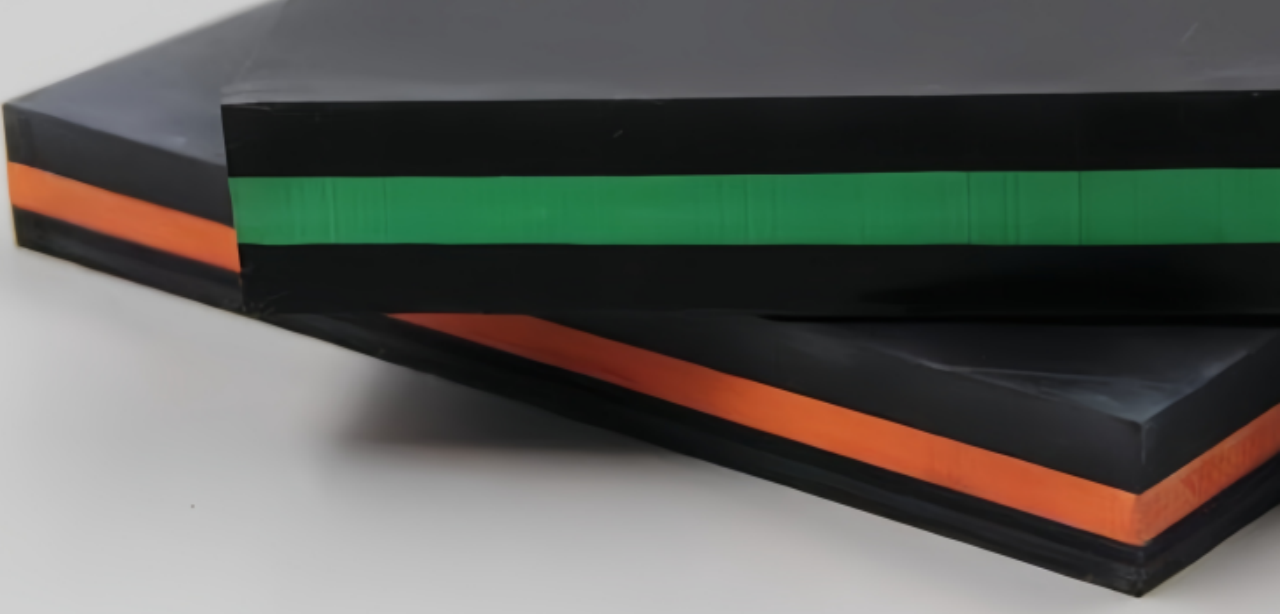
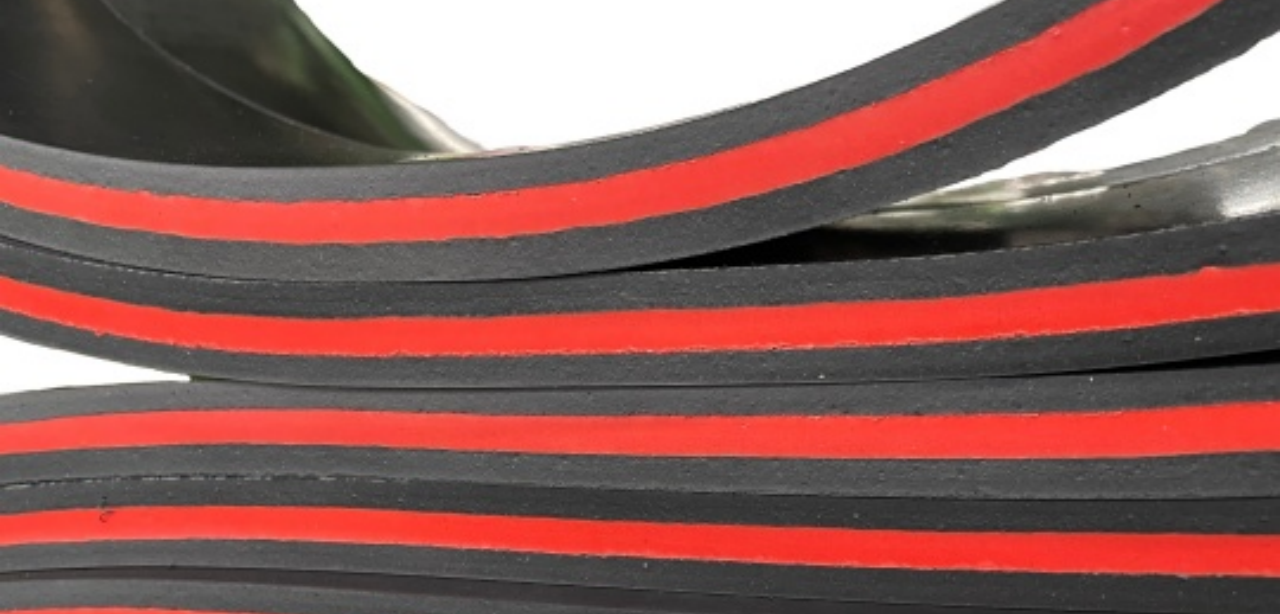
You can tell sheets apart at a glance. Pick from color combinations like black+green+black, red+black+red, or black+orange+black. Use different colors to mark different zones or sections during install and maintenance, so your team always knows which panel goes where without checking a diagram every time.
Sizes You Can Order
AOBO’s sandwich rubber comes in rolls, 6 to 20mm thick, in widths from 0.1 to 2 meters, up to 20 meters long. You can also get it in pieces, 20 to 50mm thick, cut to whatever length your job needs.
Not sure what thickness you need? It comes down to how much impact your equipment takes:
- 10-15mm — small vibrating screens
- 20-30mm — medium-sized crushers
- 30-50mm — conveyor transfer points where ore drops more than 3 meters
Where You’ll Use Sandwich Rubber
You’ll find sandwich rubber anywhere mining or quarry equipment takes a beating:
Conveyor belt cleaning — mounted on both sides of your belt to wipe off dust and wet slurry before it builds up on the rollers
Ore conveyor lining — protecting your conveyor structure from constant material contact
Vibrating screen seals — sealing gaps to keep material where it belongs
Crusher feed inlet buffers — cushioning the drop where material hits your crusher
Sand and stone quarries, aggregate and cement plants, foundries, concrete plants. If your site handles rough material day after day, this is built for you.
How Long Does Sandwich Rubber Actually Last?
There’s no single answer, since it depends on your material, your impact levels, and how thick a panel you’re running. But as a general rule, sandwich rubber in a properly matched thickness lasts 2 to 3 times longer than a standard single-layer sheet doing the same job. Thinner panels in low-impact spots may last even longer relative to their cost. Thicker panels at high-drop transfer points take more punishment, so they wear faster in absolute terms, but still outlast standard rubber by a wide margin.
The real value isn’t just the extra months or years. It’s not having to schedule an unplanned shutdown to fix a wear point that failed early.
Get Sandwich Rubber from AOBO
You shouldn’t have to keep replacing worn-out rubber sheet every few months. At AOBO, we’ve made sandwich rubber for over 20 years. Every batch goes through quality checks at every stage, from raw material testing to final inspection, so what you get matches what we tell you. We’re ISO 9001 certified and built to mine safety standards.
Tell us what you’re protecting, whether it’s a small screen or a crusher feed point, and we’ll help you pick the right sandwich rubber for your job. Contact AOBO today to get your quote.
 Arabic
  English
  Spanish
  Russian
  German
